

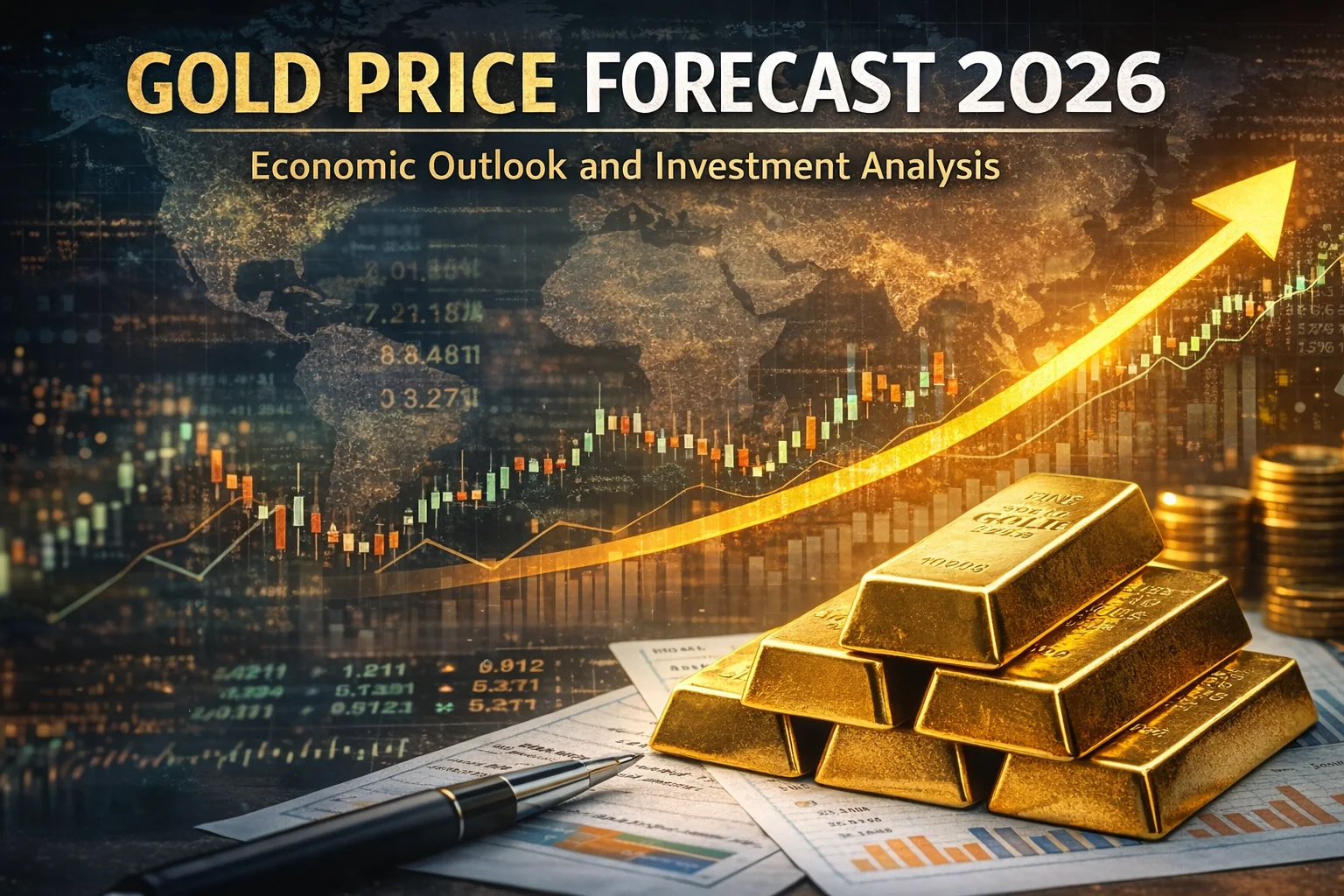
Gold Price Forecast 2026: Economic Outlook and Investment Analysis
BULLION ZONE | Gold remains one of the most closely monitored assets in the global financial system. For centuries, investors have relied on gold as a store of value and a defensive asset during times of economic uncertainty.
As the world moves closer to 2026, the Gold Price Forecast 2026 will largely depend on a combination of macroeconomic conditions, central bank policies, and geopolitical developments. These factors interact in complex ways, influencing investor sentiment and capital flows into precious metals.
Understanding these drivers is essential for investors who want to position their portfolios strategically in the coming years.
We also wrote this article in Indonesian with the title: Prediksi Harga Emas 2026: Analisis Ekonomi & Investasi
Major Factors That Could Influence Gold Prices by 2026
Forecasting gold prices requires analyzing the key economic variables that historically shape the precious metals market.
Among the most influential forces are global inflation trends and monetary policy decisions made by major central banks—especially the Federal Reserve.
Inflation and Gold Demand
Gold has long been considered a hedge against inflation. When consumer prices rise rapidly, investors often turn to gold as a way to preserve purchasing power.
Persistent inflation can be triggered by multiple factors, including:
- Supply chain disruptions
- Expansive fiscal policies
- Commodity price shocks
- Currency depreciation
When inflation expectations remain elevated, demand for gold typically increases as investors seek protection from declining currency value.
Interest Rates and Opportunity Cost
Interest rates also play a crucial role in determining gold’s performance.
Because gold does not generate income—unlike bonds or dividend-paying stocks—higher interest rates can reduce its attractiveness. When yields on government bonds rise, investors may shift their capital toward these income-producing assets.
On the other hand, when real interest rates fall or turn negative, gold often becomes more appealing as a store of value.
Geopolitical Risk and Safe-Haven Demand
Global geopolitical tensions are another powerful driver of gold prices.
During periods of instability—such as international conflicts, trade disputes, or political uncertainty—investors frequently move capital into safe-haven assets like gold.
Conversely, when geopolitical tensions decline and global markets stabilize, demand for defensive assets may weaken.
Additional Market Drivers Supporting Gold
Beyond macroeconomic fundamentals, several structural factors may also influence gold prices in the coming years.
U.S. Dollar Strength
Gold typically maintains an inverse relationship with the U.S. dollar.
When the dollar weakens, gold becomes more affordable for international investors, often increasing global demand.
A strong dollar, however, can place downward pressure on gold prices by making the metal more expensive in other currencies.
Central Bank Gold Purchases
Central banks around the world have significantly increased their gold reserves in recent years.
Many emerging economies are diversifying their foreign exchange reserves away from traditional fiat currencies and increasing exposure to gold.
If this trend continues, sustained central bank demand could provide long-term structural support for the gold market.
Global Economic Scenarios and Their Impact on Gold in 2026
To evaluate the Gold Price Forecast 2026, analysts typically consider multiple macroeconomic scenarios that could unfold over the next few years.
Scenario 1: Stagflation or Global Economic Slowdown
One possible outcome is a period of stagflation—an environment characterized by slow economic growth combined with high inflation.
Under this scenario:
- Central banks may eventually lower interest rates to stimulate economic activity
- Inflation could remain persistently elevated
- Real interest rates could turn negative
Historically, negative real interest rates have created favorable conditions for gold prices. Investors increasingly seek assets capable of preserving purchasing power during periods of economic uncertainty.
In such an environment, gold could reach new record highs by 2026.
Scenario 2: Economic Stabilization and Controlled Inflation
A more optimistic scenario assumes central banks successfully control inflation without triggering a major global recession.
In this case:
- Economic growth gradually stabilizes between 2025 and 2026
- Interest rates normalize
- Financial markets regain stability
Higher yields from bonds and other income-generating investments could attract capital away from gold.
However, gold demand would likely remain supported by jewelry consumption in major markets such as India and China, along with continued purchases by central banks.
Gold Price Forecast 2026: Potential Price Scenarios
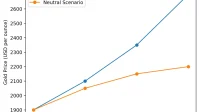
While precise price predictions are impossible, many analysts outline two broad price ranges for gold by 2026.
Bullish Scenario (Stagflation or Recession)
If inflation remains elevated and economic uncertainty persists, gold prices could rise significantly.
Estimated range:
$2,500 – $2,800 per ounce
Under this scenario, strong investor demand for safe-haven assets could push gold to new historical highs.
Neutral Scenario (Economic Normalization)
If inflation declines and global economic growth stabilizes, gold may trade within a more moderate range.
Estimated range:
$2,000 – $2,300 per ounce
Prices would likely be supported by institutional investors, central bank reserves, and long-term demand for portfolio diversification.
Why Gold Remains a Strategic Asset for Investors
Regardless of short-term price movements, gold continues to play a vital role in portfolio construction.
Investors often include gold in their portfolios for several reasons:
- Protection against inflation
- Diversification from equities and bonds
- Hedge against currency depreciation
- Stability during financial crises
Even in stable economic environments, gold remains one of the most widely recognized defensive assets in global markets.
Conclusion
The Gold Price Forecast 2026 ultimately depends on how the global economy evolves in the coming years.
If inflation remains persistent and real interest rates stay low or negative, gold could experience significant upward momentum as investors seek protection from economic uncertainty.
However, if inflation is successfully controlled and economic growth stabilizes, gold prices may trade within a narrower range.
For investors, monitoring key signals will be critical. These include monetary policy decisions by the Federal Reserve, movements in the U.S. dollar, inflation trends, and geopolitical developments.
Regardless of the scenario, gold will likely continue to play a central role in long-term investment strategies, providing protection against market volatility and economic instability.